Why Stark County builds radon-resistant
Local measurements and geology — not national boilerplate.
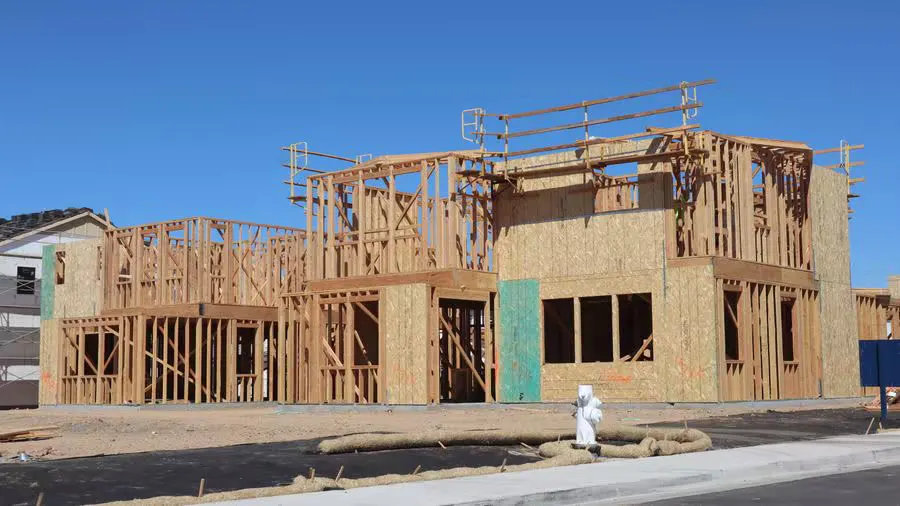
Building radon-resistant features into a house during construction costs a fraction of retrofitting the same house later — the gravel layer, membrane, and rough-in pipe go in while the slab is still open, with no core drilling, no finished-basement demolition, and no exterior pipe to hide. Stark County sits on glacial till over fractured shale and limestone — uranium-bearing rock whose fractures give radon a direct path toward foundations. A new Canton home is not meaningfully less likely to have a radon problem than an old one; tighter modern envelopes reduce air exchange, which can concentrate soil gas rather than dilute it. That is why radon-resistant construction is treated as standard practice by many builders in this area rather than an upgrade.
Sources: EPA Map of Radon Zones (Ohio); Ohio Department of Health; county-level radon measurement data
What gets built in — and the passive/active question
Ohio regulates radon professionals through the Department of Health, and Stark County's Zone 1 designation makes radon-resistant construction an easy call for local builders: the county's measured average of 6.42 pCi/L is well above the federal action level before any mitigation. The fractured-bedrock geology under Canton also argues for building the system in from the start — fracture-fed radon delivery is uneven enough that even two adjacent new builds can test very differently, and the rough-in costs a fraction of what a retrofit does.
A radon-resistant new build layers in five things: a gas-permeable aggregate layer under the slab, a polyethylene vapour barrier over it, sealed and caulked slab penetrations and joints, a vent pipe run from the aggregate up through the building and out the roof, and a junction box in the attic so a fan can be added later without new wiring.
That stack is a passive system — it relies on natural stack effect and does reduce levels, but in a Zone 1 county it frequently does not get a house under 4.0 pCi/L on its own. The honest sequence is: build the passive system, test the finished house, and if it is still above the action level, add the fan to make it active. Because the pipe and electrical junction already exist, that conversion is a short, inexpensive job instead of a full retrofit.
- Full RRNC rough-in coordinated with the slab pour
- Passive-to-active conversion — adding the fan to an existing rough-in
- Post-construction testing to confirm whether the passive system is enough
- Builder and contractor coordination across Stark County
Related pages
Every page cites its sources — start where your question is.
Canton New Construction Radon Systems — FAQ
Is radon-resistant construction required in Canton?
What does RRNC add to the cost of a new home?
Does a passive system mean I don't need to test?
Can you convert my builder's passive system to active?
Talk to us about radon in your Canton build
Serving Canton and the surrounding Stark County area. No obligation — most quotes back same day.